How the Human Cardiac System Inspired a New AI Breakthrough
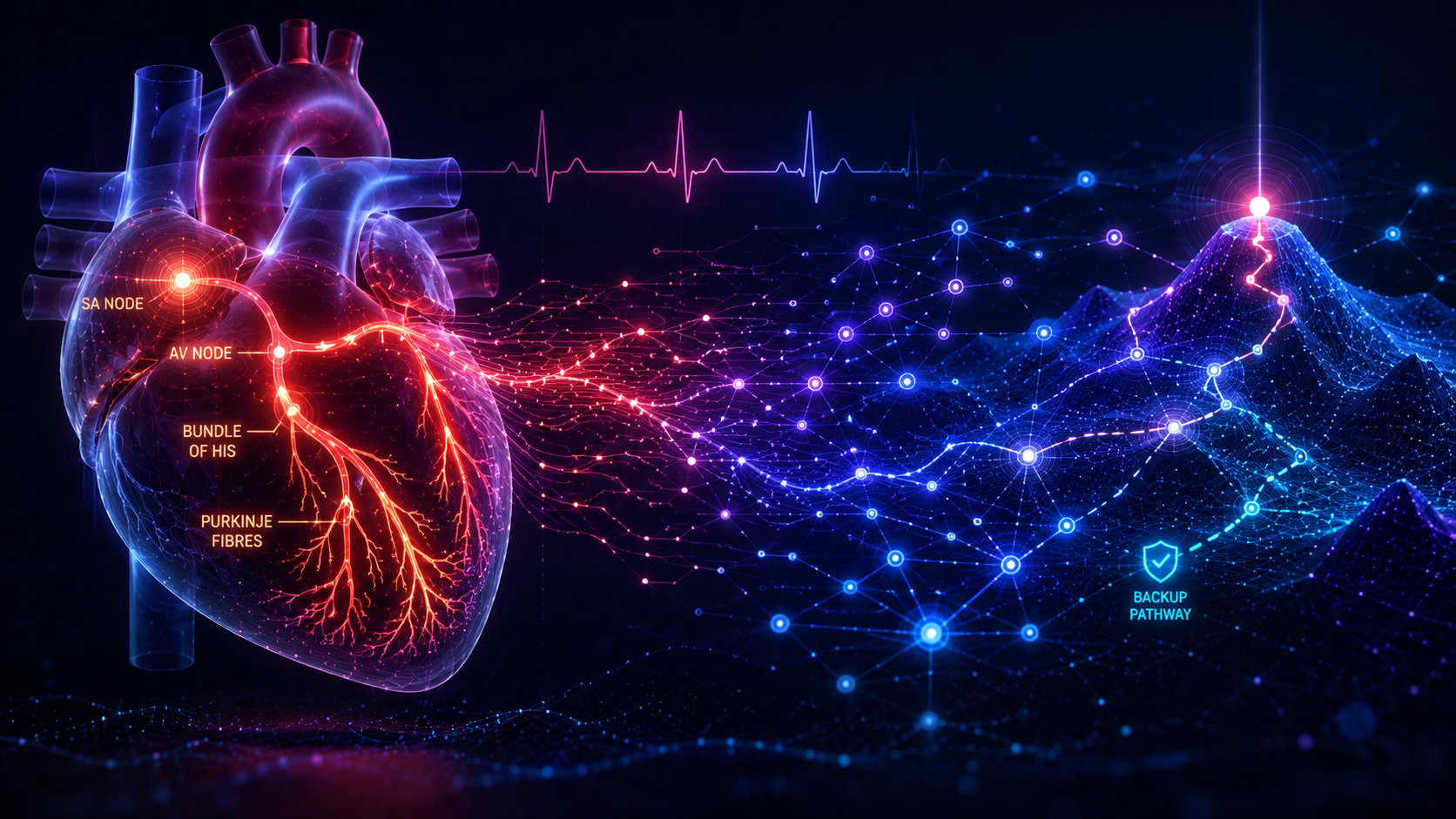
Ever wonder what the human heartbeat and Artificial Intelligence have in common?
Surprisingly, the same mechanism that keeps the heart beating in rhythm is now assisting computers to solve complex real-world engineering problems. Encounter the Artificial Cardiac Conduction System (ACCS) algorithm, a smart, bio-inspired optimisation algorithm that brings cardiac physiology to computational smart decision-making.
How Does It Work?
Your heart's electrical system is responsible for helping blood flow through your body smoothly:
· The primary rhythm originates from the Sinoatrial (SA) Node.
· The AV Node slows down the heart activity for the proper filling of the heart chambers.
· The Bundle of His and Purkinje Fibres transmit the impulse to make the muscles contract.
In the event of any failure or arrhythmia (abnormal heartbeat) in this system, back-up pathways automatically take over to keep you safe! The ACCS algorithm is a simplified version of this network! In computer science jargon, candidate solutions are like these cardiac nodes. They explore a complicated problem space by communicating among themselves and continually altering their position to discover the "best" answer (the global optimum).